 Weddings
 Birthdays
 Engagement parties
 Hen and stag dos
 Anniversaries
 Baby showers
 Christenings and naming days
 Bar and bat mitzvahs
 Reunions
 Celebrations of life
 Any other gathering
How to do a wedding seating plan without losing a weekend to it
The seating plan is where wedding planning turns into a logic puzzle. You start with a nice idea of mixing people up, and two hours later you’re trying to work out whether an uncle can sit near a cousin he once lent a car to. I’ve done one for my own family and helped with several more. There’s a method, and it’s quicker than the sticky notes on the kitchen door suggest.
Wait for the replies
Don’t start properly until most RSVPs are in, usually four to six weeks before. Before that, every decline knocks a table over. Your venue will want the final plan around two weeks before the day, along with dietary needs, so build towards that date.
Keep everything in one list: who’s coming, which household they’re in, their meal choice and any access needs. If replies come in through an online RSVP, most of that is already done for you.
Choose your top table
The traditional top table runs couple, parents and best man and maid of honour in a set order, and it’s getting rarer. A lot of couples now sit just the two of them at a small table, or put parents at the heads of their own tables of family. Both are perfectly normal.
If parents are divorced and civil, a long top table can work. If they aren’t, give each parent their own table to host. Nobody needs to spend a three-course meal elbow to elbow with an ex.
Round tables or long ones
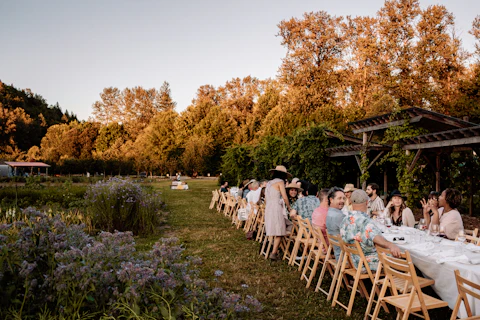
Round tables of eight to ten are the default and easy to plan: each one becomes a little group. Long banquet tables look wonderful and make conversation flow, but people only really talk to the three or four people around them, so plan in clusters rather than whole tables.
Plan in groups, not people
- Sort guests into groupsFamily on each side, school friends, university, work, plus-ones. Households stay together.
- Fill tables by groupSeat groups together first, then use the leftovers to bridge two groups that will get on.
- Place the special casesOlder relatives away from the speakers and close to the loos. Families with small children near a door. Anyone with a wheelchair with room to move.
- Seat the singles thoughtfullyPut them with people they know, not at a table built around a hopeful matchmaking theory.
- Check the sight linesMake sure the people who matter most can see you and the speeches.
Handling the difficult bits
If two guests really can’t be near each other, put them at opposite ends of the room and seat each with their own friends, so neither feels moved aside. A “kids’ table” works for over-sevens if it’s close to the parents; younger children are usually happier on a parent’s knee.
Resist the urge to fill every table perfectly. A table of nine is fine. A table of ten with a stranger squeezed in to balance the numbers is less fine.
Late changes
Someone will drop out in the final week, and another will ask to bring a partner. Keep the plan somewhere easy to edit and wait as long as your venue allows before printing the table plan. If your seating lives online, guests can even see their table before they arrive, which makes the queue at the board a lot shorter.